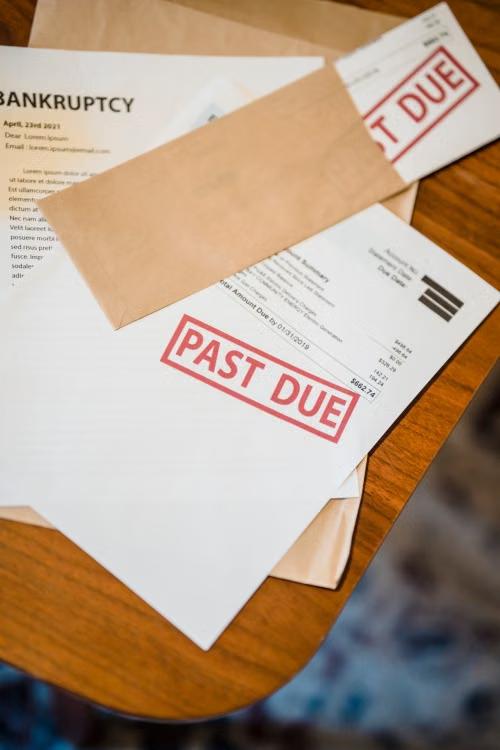

Most people in serious debt do not act quickly. They wait for a better month, a raise, or a single payment that will finally allow them to catch up. They negotiate payment arrangements that offer temporary relief without changing the underlying numbers. They draw down savings to cover minimum payments while principal balances continue compounding. Some hold on for years, certain that the situation will eventually improve on its own.
This is a predictable response to a situation that feels impossible to resolve. The difficulty is that delay is rarely neutral. Interest compounds. Creditors escalate. Legal actions are filed. By the time many people consult a debt relief attorney in Corpus Christi, TX, the financial picture has grown considerably more difficult than it needed to be, and the options available have narrowed accordingly.
Recognizing when debt has become genuinely unmanageable, and when the right path forward is bankruptcy rather than another attempt at negotiation, is one of the most consequential financial decisions a person can make.
Understanding what to look for is the necessary starting point. For those carrying medical debt and other unmanageable obligations, the patterns of financial escalation tend to follow predictable trajectories regardless of how the debt originally accumulated.
Common Signs That Debt Has Crossed a Line
Minimum Payments Are No Longer Reducing Balances
One of the clearest indicators that debt has become structurally unmanageable is when making every required minimum payment leaves balances unchanged or continuing to grow. This happens when the interest charges on high-rate revolving accounts exceed the minimum payment amount. The result is a balance that expands even while the debtor is technically meeting every payment obligation.
For many households, this threshold arrives quietly. They pay what is required each month, assume they are making progress, and discover much later that the outstanding balance is higher than when they began. At that point, significantly more income would need to be redirected toward the debt simply to stop the growth, let alone reduce the principal. For most people in this situation, that additional income does not exist after covering basic living expenses.
When minimum payments no longer reduce principal and disposable income cannot sustain more than the minimums, the debt is not being managed. It is being carried while it grows, and the carrying cost increases with every passing month.
Creditors Have Escalated Beyond Notices
A second sign is when creditors move beyond letters and phone calls into formal legal action. People discover that informal negotiation is no longer on the table when hit with a debt collection lawsuit in Corpus Christi, TX. When a creditor files suit and obtains a judgment, that judgment opens the door to additional enforcement tools including bank account levies and liens on non-exempt property.
At this stage, the options available to the debtor narrow considerably. Settlement may still be possible in theory, but it is negotiated from a far weaker position than before the lawsuit was filed. The window for proactive planning has typically closed, and every subsequent decision becomes reactive. Addressing a debt problem before legal escalation is almost always less costly, less stressful, and less damaging to the overall financial situation than addressing it after a judgment has been entered.
Situations Where Bankruptcy May Make More Sense Than Other Options
Bankruptcy may be a better approach when other options are not workable. That is not a promotional claim. It reflects an honest assessment of the alternatives available at different stages of financial distress and the realistic effectiveness of each one.
Debt settlement requires a creditor willing to negotiate, a lump sum or structured payment the debtor can actually fund, and the capacity to set aside money while collectors continue their pressure. For many people in serious distress, none of those conditions are reliably present at the same time. Settlement also results in taxable income on forgiven debt in most cases, which creates a secondary tax obligation after the original problem appears to have been resolved.
Debt management programs through nonprofit credit counseling agencies can be effective for people whose problems are primarily high interest rates on balances that are manageable in total size. For people whose total debt load is simply too large relative to their income, a monthly payment reduction through a debt management program does not change the underlying math enough to produce a meaningful outcome.
Bankruptcy may provide a cleaner resolution than either of those alternatives when income has dropped significantly and is unlikely to recover in the near term, when multiple creditors are simultaneously pursuing legal action, when property is actively at risk, or when there is no realistic repayment horizon for the total debt under any reasonable set of income assumptions. A debt relief service provider in Corpus Christi, TX can help evaluate these factors in the context of a specific financial situation rather than in the abstract.
How Different Types of Debt Shape the Decision

Unsecured Debt: Credit Cards and Medical Bills
Unsecured debt is the category that most often drives people toward bankruptcy. The need for credit card debt relief in Corpus Christi, TX, is common because credit card balances tend to accumulate at high interest rates and can reach amounts that are mathematically impossible to repay on a typical income within any reasonable timeframe. A person carrying thirty thousand dollars in high-interest revolving debt who can only direct a few hundred dollars monthly toward principal is not on a repayment path. The numbers do not support it.
Medical debt creates the same dynamic. A single hospitalization can generate bills in the tens of thousands of dollars that arrive without warning and without any repayment structure built around what the patient can realistically afford. For many families, medical bill collections for debt relief become a persistent financial and emotional burden because no degree of good intent can close the gap between what is owed and what is available.
Because neither credit card debt nor medical debt is secured by collateral, unsecured creditors cannot repossess property directly. What they can do is pursue civil lawsuits, obtain judgments, and use those judgments to seek bank levies or property liens. Bankruptcy addresses unsecured debt directly and comprehensively. According to the Consumer Financial Protection Bureau, credit card and medical debt are consistently among the most widely reported forms of financially unmanageable obligation for American households.
Secured Debt: Mortgages and Vehicle Loans
Secured debt introduces different considerations. Bankruptcy does not automatically eliminate the lien on a home or vehicle. The underlying lien survives to the extent the debtor wants to retain the secured property. What bankruptcy can accomplish is creating structured legal options for addressing arrears on property the debtor wants to keep.
In Texas, most standard mortgage foreclosures proceed through a non-judicial process, meaning lenders can move toward a trustee sale under typical purchase-money mortgage arrangements without first filing a lawsuit. Bankruptcy’s automatic stay pauses this process immediately upon the filing of a petition, regardless of how far along it has progressed. Chapter 13, in particular, allows past-due mortgage payments to be repaid over a three-to-five-year plan, which can preserve a home that would otherwise be lost to the foreclosure process.
Priority Debt: Taxes and Child Support
Priority debts occupy a separate category in the bankruptcy framework. Most income tax debts and all domestic support obligations, including child support and alimony, cannot be discharged through bankruptcy. They must still be paid regardless of which chapter is filed.
What Chapter 13 can provide is a structured framework for repaying those priority obligations over the life of the plan, while simultaneously discharging the unsecured debt that would otherwise consume all available income each month. Older income tax debts may qualify for discharge under specific timing and compliance conditions, but those situations require individual analysis and cannot be answered with a general rule.
The Basic Difference Between Chapter 7 and Chapter 13
Chapter 7: Quicker Discharge, Income Threshold Applies
A Chapter 7 bankruptcy attorney works with clients pursuing the more streamlined path to eliminating unsecured debt. Eligibility depends on passing the means test, which measures income relative to Texas median household figures and available disposable income after allowable deductions.
For those who qualify, the timeline is relatively compressed. Most of the unsecured debt that has been accumulating for years, including credit card balances, medical bills, and personal loans, can be discharged within a few months of filing. The discharge does not negotiate or reduce the debt. It legally eliminates the obligation to pay it. Under Texas’s strong exemption framework, most people filing Chapter 7 in South Texas do not lose any property in the process.
Chapter 13: Repayment Over Time, More Flexibility on Property
A Chapter 13 bankruptcy attorney works with clients who need structured repayment rather than a rapid discharge. Instead of a near-immediate elimination of most unsecured debt, Chapter 13 establishes a court-approved repayment plan lasting three to five years. The plan pays creditors based on what the debtor can afford after living expenses and priority obligations, and at the end of the plan period, remaining dischargeable debt is eliminated.
Chapter 13 is often the stronger choice for clients with regular income who need time to catch up on a mortgage or vehicle loan, for those whose income exceeds the Chapter 7 threshold, or for those who have property they want to protect beyond what exemptions cover. It also allows clients to file for bankruptcy relief in TX in circumstances where Chapter 7 would not produce the outcome they need.
Realistic Expectations About What Bankruptcy Can and Cannot Fix

Bankruptcy is not a universal solution, and any honest discussion of whether it is the right decision requires acknowledging what it does not accomplish.
Most student loan debt is not dischargeable in a standard bankruptcy proceeding. Discharge requires a separate adversary proceeding demonstrating undue hardship under a legal standard that is difficult to meet in most circumstances. Child support and alimony cannot be discharged under any chapter. Income taxes owed for recent years are generally not dischargeable, though older tax debts may qualify under specific conditions that require individualized analysis.
Bankruptcy does leave a mark on a credit report. The impact is real and should not be minimized. What is also true is that a credit report showing a bankruptcy discharge is often in better practical condition than one carrying multiple years of active collection accounts, outstanding judgments, and charge-offs that continue accumulating negative marks. The United States Courts provide authoritative information on which categories of debt can and cannot be discharged through the bankruptcy process.
For people whose debt is primarily composed of dischargeable obligations and whose realistic alternatives have been exhausted or are not viable for their circumstances, the case for bankruptcy often becomes clear once the full facts are laid out honestly.
Your Situation Deserves an Honest Assessment, Not a Generic Answer
There is no universal answer to whether bankruptcy is the right decision. The answer depends on the specific type and amount of debt, current and projected income, asset position, family circumstances, and what the person is actually trying to protect or accomplish. What makes sense for one person in financial distress may not make sense for another carrying a similar dollar amount of debt in entirely different life circumstances.
What can be said with confidence is that the decision deserves a real analysis rather than a guess or a generic recommendation. Waiting without a plan rarely improves the outcome. Acting without fully understanding the options can produce a result that is worse than doing nothing at all. The right answer comes from applying the relevant legal and financial framework to the actual, specific situation.
If property is at risk, understanding how Texas foreclosure protection through bankruptcy works is an important part of that conversation. So is the complete picture of which debts exist, which are dischargeable, and which chapter produces the best result for the circumstances at hand.
Bankruptcy lawyers in Corpus Christi, TX, at the Law Office of Joel Gonzalez work with clients across South Texas to provide that honest analysis, beginning with a free initial consultation. A bankruptcy lawyer in Corpus Christi, TX, who has guided clients through every variation of this process is prepared to do the same for you. Schedule a consultation today to get a clear picture of what the options look like for your specific situation.