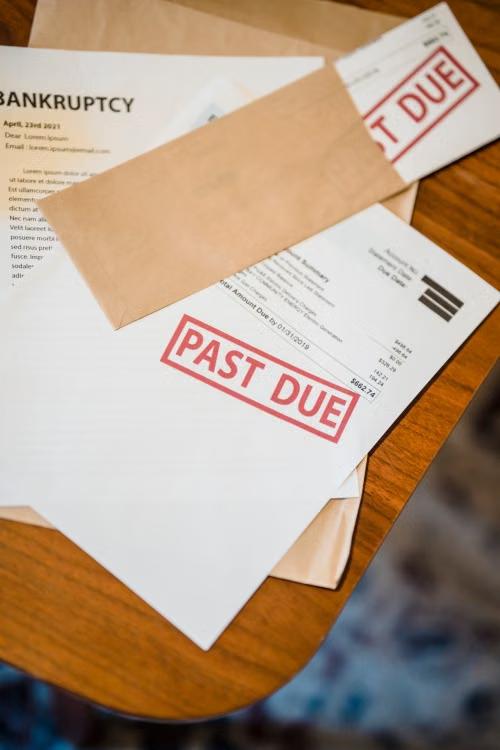

For most people, the day a bankruptcy case closes is the first time in years they wake up without the specific weight of unresolvable debt pressing on every financial decision. The creditor calls have stopped. The balances that could not be paid no longer exist in any legal sense. The court process is complete.
What follows is not a return to the financial situation that existed before the debt accumulated. It is something genuinely different: a starting point with fewer obligations, a cleaner financial picture, and a real opportunity to build differently than before. Filing for bankruptcy protection is not the end of a financial story. For most people who go through it with proper legal guidance, it is the chapter that finally makes the rest of the story workable.
Understanding what actually happens in the months and years after a case closes matters. How credit recovery works, what the credit report looks like and how it changes over time, which habits determine whether the financial relief lasts, and what borrowing actually looks like in the years ahead: this is the information worth having before, during, and well after the process.
What Happens Immediately After the Case Is Completed
The discharge order is issued by the court and formally transmitted to all creditors listed in the case. From that point forward, those creditors are legally prohibited from attempting to collect on discharged debts. A creditor who continues collection efforts on a discharged obligation is violating federal law, and the remedies available to the debtor for willful violations are real and enforceable.
Clients who filed Chapter 7 typically receive the discharge order within three to four months of the filing date. For those who completed a Chapter 13 repayment plan, discharge comes at the end of the three-to-five-year plan period, after all required payments have been made to the trustee. The timelines differ significantly, but the legal effect is the same: the obligation to pay discharged debts is eliminated by federal court order.
In the first weeks after discharge, many clients describe a specific kind of disorientation. The pressure has lifted, but the financial habits and anxieties that developed over years of serious debt stress do not simply disappear with the court order. This is a normal and expected part of the transition. A bankruptcy lawyer in Corpus Christi, TX, who has guided clients through the full process helps orient them toward concrete next steps rather than leaving them without direction at the moment the case closes.
The immediate practical steps after discharge are straightforward: confirm that credit reports accurately reflect the discharged account statuses, establish a written monthly budget, and identify one or two specific rebuilding steps to begin within the first ninety days. Starting early makes a measurable difference in the pace of recovery.
Understanding the Credit Report After Bankruptcy
How Long Bankruptcy Appears on a Credit Report
Bankruptcy does appear on a credit report, and this is among the most common concerns clients raise. The reporting timeline is set by federal credit reporting law, not by individual creditors, courts, or bankruptcy trustees.
A Chapter 7 bankruptcy is typically reported for ten years from the filing date. A Chapter 13 bankruptcy is typically reported for seven years from the filing date. These timeframes are established under the Fair Credit Reporting Act. The Consumer Financial Protection Bureau provides official guidance on how bankruptcy is reflected on credit reports and what legal standards govern the reporting period.
These figures represent the outer limit of when the notation can appear on the report, not the limit of the person’s ability to rebuild their financial standing. The practical impact of the bankruptcy notation diminishes considerably well before it reaches those outer limits.
What the Report Actually Shows Right After Discharge
Many clients expect their credit report to appear catastrophic immediately after discharge. The reality is more nuanced. Accounts included in the bankruptcy typically show a zero balance and a discharged or included-in-bankruptcy status. This is meaningfully different from an account that remains in active collections showing a balance still owed, with a growing record of missed payments and escalating collection activity each month.
For someone whose credit card debt relief in Corpus Christi, TX, came through a bankruptcy discharge, those accounts close out cleanly rather than continuing to accumulate new negative marks. For a person whose report already carried years of late payments, charge-offs, and outstanding collection balances, a discharge often represents a stabilization of the damage rather than a new wave of deterioration. Lenders evaluating credit history look at the overall trajectory over time, and a report showing a discharge with no new negative marks begins trending in a better direction sooner than most people anticipate.
Rebuilding Credit: A Realistic Timeline

The First Twelve Months
Credit rebuilding begins in the first year, not in some distant future after the bankruptcy notation has aged sufficiently. The tools available in this phase are modest but effective, and the habits established now have an outsized influence on how quickly scores recover.
A secured credit card, where the cardholder deposits a set amount that becomes the available credit limit, is the most accessible starting point for most people following a bankruptcy discharge. Used responsibly, with a small recurring charge paid in full each month, it builds positive payment history immediately. On-time payment history is the single most influential factor in credit scoring, and establishing it does not require large balances or high credit limits.
Credit-builder loans, offered by some credit unions and community banks, operate on a similar principle. A small loan amount is deposited into a savings account while the borrower makes fixed monthly payments. At the end of the loan term, the borrower receives the saved funds and has an installment payment record on the credit report. Becoming an authorized user on a family member’s well-managed account is another option, as the account’s history can appear on the authorized user’s report without requiring the person to carry independent debt.
Years Two and Three
Meaningful credit score recovery typically becomes visible in the second and third years after discharge, provided the rebuilding practices from year one were followed consistently. Unsecured credit cards, sometimes with lower initial limits and higher rates than would be available to a borrower without a prior bankruptcy, often become accessible during this period. Modest vehicle financing may also become realistic depending on the lender and the overall post-discharge credit profile.
This is also the phase where the most common recovery mistake occurs. When credit access returns after a period of restriction, some people overextend by opening multiple new accounts simultaneously or carrying revolving balances from month to month. The goal in years two and three is not to maximize credit access. It is to demonstrate consistent, disciplined use of a small number of accounts over a sustained period of time. Quality of payment behavior outweighs quantity of open accounts at this stage of recovery.
The Consumer Financial Protection Bureau offers practical educational guidance on rebuilding credit following a significant financial event, including specific strategies for establishing positive history without overextending into new obligations during the recovery period.
Five Years and Beyond
By the five-year mark, many people who followed consistent rebuilding practices from the outset find that their credit scores have recovered to ranges supporting meaningful financial decisions: conventional auto financing, personal loans at competitive rates, and, depending on the program and the individual’s complete financial profile, access to home lending.
The debt relief service in Texas marketplace includes many services that promise accelerated credit recovery or claim the ability to remove bankruptcy notations before their legal expiration. Most of those claims do not align with how credit reporting law actually works. Time combined with consistent positive payment behavior is the engine of credit recovery after bankruptcy. There is no technique that meaningfully improves on it, and pursuing shortcuts can sometimes create new problems while solving none of the original ones.
The Financial Habits That Make Recovery Last

A bankruptcy discharge eliminates debt. It does not change the financial habits that contributed to accumulating it. That distinction matters enormously, and it is the part of recovery that rests entirely with the client going forward.
Budgeting is the foundation. A written or tracked budget that accounts for all income, assigns each dollar to a defined category before it is spent, and distinguishes between essential and non-essential expenses is the difference between a household that gradually rebuilds and one that finds itself in a familiar situation within a few years. For many people who went through bankruptcy, deliberate planned spending was absent during the period when debt was accumulating. Building that practice consistently now is the most protective step available.
An emergency fund changes how financial shocks land. A car repair that would previously have gone onto a credit card can instead come from a dedicated savings buffer. An unexpected medical bill does not force a missed essential payment. The traditional target of three to six months of essential expenses is worth working toward over time, but even a modest initial reserve of a few hundred dollars shifts the daily financial risk profile in a meaningful direction.
Understanding how interest compounds on revolving credit and how installment debt is structured also matters. Many people who went through bankruptcy did not fully understand the mathematical effect of high-rate balances combined with minimum payment strategies. That understanding, built deliberately now, prevents the same dynamic from reasserting itself as credit access returns in the coming years.
What Future Borrowing Actually Looks Like
A persistent fear during bankruptcy is that credit access will be permanently closed off afterward. The practical reality of life after discharge is more encouraging than that fear suggests, though it does require patience and realistic expectations about the terms available during the earlier years of recovery.
Auto financing is often accessible within one to two years post-discharge, typically at higher interest rates initially than would be available to a borrower with an uninterrupted credit history. As positive post-discharge payment history accumulates, refinancing into a lower rate often becomes an option. Lenders who work with borrowers in early credit recovery operate throughout South Texas, and the vehicle financing market after bankruptcy is more accessible than many clients expect.
Home loans involve a longer horizon. Government-backed loan programs have historically included waiting periods after bankruptcy discharge before a borrower becomes eligible, and those periods vary by program type and circumstances. FHA loan guidelines, for example, have historically allowed applications as early as two years after Chapter 7 discharge, subject to other qualification criteria. Program requirements and lender policies change over time, and anyone planning a home purchase after bankruptcy should verify current eligibility requirements directly with lenders and a HUD-approved housing counselor when they are ready to move forward. Presenting a specific waiting period as a current guarantee would not be accurate here.
Federal student loans for educational programs are not affected by a prior bankruptcy. Educational borrowing after discharge is available on the same standard terms as for any other borrower.
The Relief That Follows When the Pressure Lifts
Financial stress is not abstract. It affects sleep quality, physical health, relationships, and the quality of daily decision-making in ways that are widely documented and deeply felt by those who experience serious debt pressure over an extended period. People living under the weight of unresolvable debt make choices from a position of chronic anxiety, and that anxiety does not lift through discipline alone when the underlying debt cannot realistically be repaid regardless of effort.
When the collection calls stop and the legal process closes, that particular source of pressure ends. What replaces it is not comfort or certainty, but clarity. The financial situation is what it is. The discharged debts are legally gone. The path forward, however modest at first, moves genuinely forward rather than sideways or backward.
People who have completed bankruptcy and rebuilt their finances over the years that follow often describe a changed relationship with financial decisions. Not fearlessness, but a grounded perspective that comes from having navigated the worst outcome and found a workable way through it. The fact that they went through the legal process, and that it worked as it was designed to, becomes part of how they approach financial decisions afterward.
The stop debt collection harassment reality after discharge, that creditor contacts are legally prohibited rather than merely paused, is something clients experience before they fully articulate it. The quiet where the pressure used to be is the first concrete signal that the situation has fundamentally and permanently changed.
The Path Forward Is Already Underway

Recovery from bankruptcy is not a question of whether it is achievable. For most people who complete the process with proper legal guidance, maintain consistent financial habits in the years that follow, and use the credit access that returns to them responsibly, the trajectory is upward. It is gradual. It requires consistency. And it is more predictable than most people in the middle of a financial crisis believe it can be.
Joel Gonzalez has guided clients throughout South Texas, including Corpus Christi and the surrounding communities in the Southern District, through the process and into the recovery phase that follows. If you are still in the evaluation stage and considering how to protect a vehicle or other property through the filing, the information on repossession protection through bankruptcy is worth reviewing as part of that decision.
For those ready to understand what their specific situation involves and what the path forward looks like, contact the Law Office of Joel Gonzalez to schedule a free initial consultation. A bankruptcy attorney in Corpus Christi, TX, who has worked with clients through every stage of this process is prepared to provide the same thorough, honest guidance for your situation. Reach out today.